
Carolina Montero Orphanopoulos
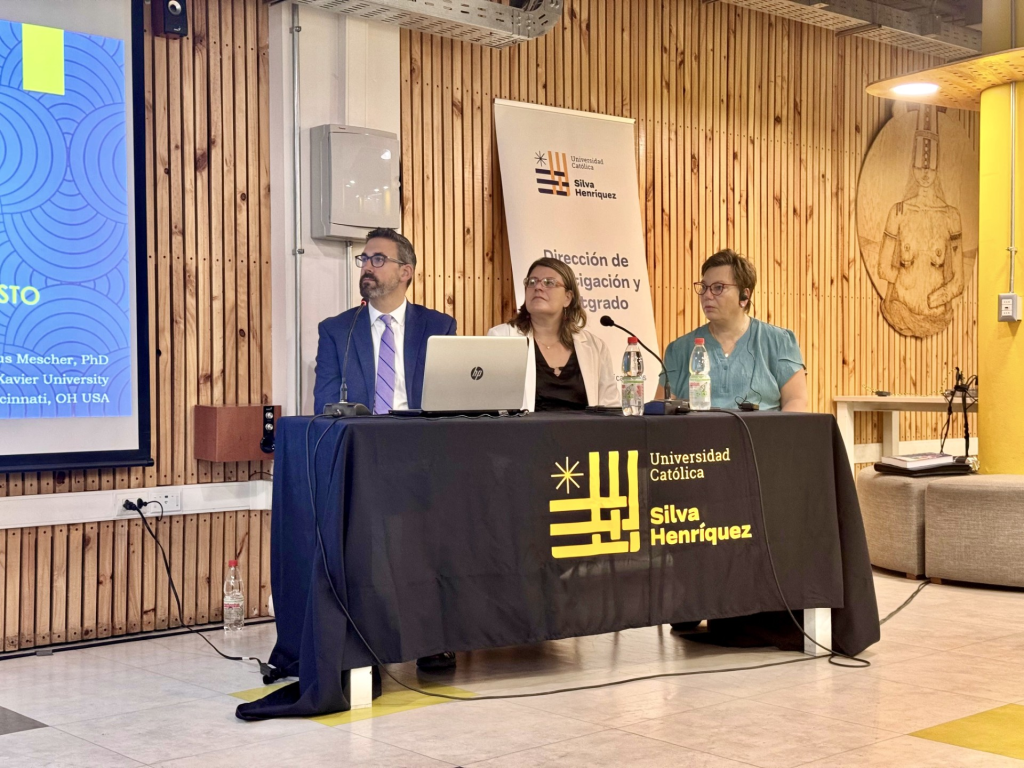
Image Creator: Communications UCSH
Publisher / License: UCSH, open access
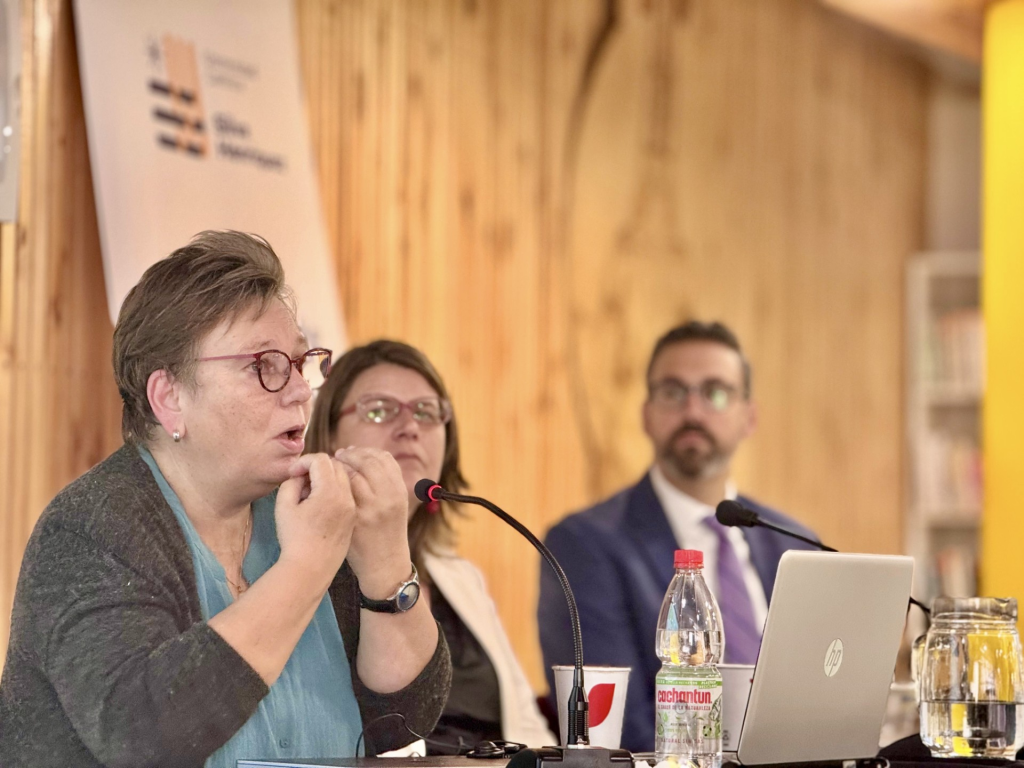
Image Creator: Communications UCSH
Publisher / License: UCSH, open access
What happens when the sacred becomes a site of betrayal? When the very place meant to shelter, nourish, and offer grace becomes the setting of profound harm?
That question lingered over the academic panel held on November 20, 2024, at the Universidad Católica Silva Henríquez (UCSH) in Santiago. The event, titled “Abuse in Ecclesial Contexts: Its Specificity and Particular Harms,” was more than a scholarly conference. It was a collective act of conscience. Twenty-five participants—among them theologians, ethicists, psychologists, lawyers, and advocates—gathered not merely to speak about abuse in the Catholic Church, but to reckon with its ongoing moral and spiritual implications. To give a bit more context: this panel on November 20 at Universidad Católica Silva Henríquez was closely connected to my work in the Psychology Cross-Training for Theologians program at the University of Birmingham. I’m writing about the panel here because it became a powerful example of what cross-training looks like in practice: researchers, practitioners, and survivor advocates sitting together, listening carefully, and trying to understand how harm happens and what genuine repair might require. Sharing this on the blog feels important, not only to document the experience, but to open up the conversation to a wider community that is also searching for language, clarity, and hope in the face of these wounds.
Moral Injury
The day opened with a jarring clarity. Dr. Marcus Mescher (Xavier University) introduced the concept of moral injury, a term developed in the context of war trauma, to name the wounds left behind when deeply held ethical and relational commitments are shattered. Transposed into ecclesial language, it describes what happens when clergy—figures entrusted with sacramental authority—become perpetrators, and when ecclesial institutions protect them rather than the vulnerable.
The injury, said Mescher, is not just emotional. “It is moral. It is spiritual. It disorients survivors’ sense of what is good, what is trustworthy, what is holy.” The betrayal cuts deep into the symbolic and spiritual grammar that once structured the believer’s world.
Interwoven Forms of Harm
That disorientation was taken up and expanded by Dr. Carolina Montero (UCSH), whose talk synthesized qualitative research of autobiographies from Latin American, North American, and European survivors of clerical abuse. She argued that ecclesial abuse cannot be fully understood through psychological diagnoses or legal paradigms alone. It requires a theological and epistemological rethinking. “We must listen to survivors not just with pastoral concern, but with theological humility,” she urged. “Their narratives unsettle the Church’s self-understanding and demand a re-examination of concepts like grace, vocation, and spiritual authority.”
Montero identified three interwoven forms of harm: moral, spiritual, and psychological. Moral damage manifests when survivors begin to doubt their own ethical worth or agency. Spiritual harm is particularly acute when rituals, sacraments, and prayer—once mediators of grace—are used as instruments of manipulation. Psychological trauma, including dissociation and PTSD, is intensified by the very sacralization of the abuser and the denial or disbelief of institutions meant to protect.
One of the most sobering moments of her presentation focused on the ritual desecration that occurs when abuse happens during or around sacraments. “This is not just abuse,” she stated. “It is the profanation of what was meant to be holy. Survivors are left not only with trauma but with a fractured relationship to God.”
Epistemic Ruptures
This theme of spiritual rupture was echoed in the powerful intervention by Dr. Hille Haker (Loyola University Chicago), who challenged the Church—and academia—to reconsider how we narrate ecclesial abuse. Drawing on narrative ethics and feminist theory, Haker warned against reducing survivors’ experiences to “trauma porn” or sentimentalized accounts. Instead, she framed their testimonies as epistemic ruptures—as revelations that interrupt the Church’s moral complacency and unveil structures of systemic complicity.
“We must stop speaking about survivors as if they were merely broken,” she insisted. “They are moral agents. Their voices can help reconfigure the Church’s imagination—if we dare to listen.”
Haker also spoke movingly about shame—not only as a personal emotion but as a socially cultivated silence. Shame, in ecclesial contexts, is often redistributed: survivors are shamed into silence while perpetrators are shielded by institutional power. Breaking that silence, she argued, is an act of justice—and of theological truthfulness.
Shared Searching
The final session, a 90-minute roundtable, opened the space for shared searching. Participants were invited to voice their experiences, struggles, questions, and needs. In that room, everyone became an “expert” in their own right: lawyers, pastoral workers, theologians, and survivor advocates, each speaking from a different vantage point shaped by commitment and lived reality. The conversation did not yield easy answers. But what emerged was something deeper: an atmosphere of moral seriousness, attentive listening, and collective vulnerability.
Moving Forward
Throughout the day, what became clear was that reparation must mean more than an apology, more than compensation. As Montero writes elsewhere, it must involve “a theological reckoning with the sacred as it has been weaponized.” Reparation must be structural, sacramental, and symbolic. It must be built on truth-telling, institutional accountability, and the active protagonism of survivors in reimagining what Church could mean. This includes dismantling the architectures of impunity and denial that have long shaped ecclesial governance. But it also includes something deeper: a transformation of how we understand power, community, and holiness.
The panel closed not with conclusions, but with commitment. The commitment to keep listening. To stay with discomfort. To hold space for mourning. And to begin building forms of life—and theology—that no longer spiritualize harm but instead witness to truth and enable healing. Maybe that is the task ahead: to unlearn what has protected complicity, and to begin again—not by defending the Church, but by walking with those it wounded. As we continue to face the painful legacy of abuse in religious settings, perhaps the most important thing to carry forward is the commitment to keep listening—especially when what we hear is uncomfortable. Change begins with small, steady acts: believing survivors, questioning the cultures that allow harm to hide, and refusing to settle for superficial forms of “repair.” If there is an invitation here for readers, it is this: stay attentive to the stories that unsettle us, support the people and communities working for accountability, and allow these conversations to reshape how we imagine trust, authority, and care. None of us can solve these wounds alone, but each of us can help create environments where truth is welcomed and healing becomes possible.
